The main elements of blood include plasma, red and white blood cells, and platelets. Platelets are most recognized for their clotting function but also secrete growth factors vital for tissue healing and regeneration.
For those in Lawrenceville interested in natural skin enhancement, these growth factors play a role in renewing the skin, improving texture, and enhancing overall appearance.
PRP is a specialized solution called Platelet-Rich Plasma that contains high levels of platelets and growth factors necessary for tissue repair and regeneration. By providing concentrations significantly above those found in normal blood, PRP strengthens the body’s natural healing and recovery capabilities.
How Does PRP Work?
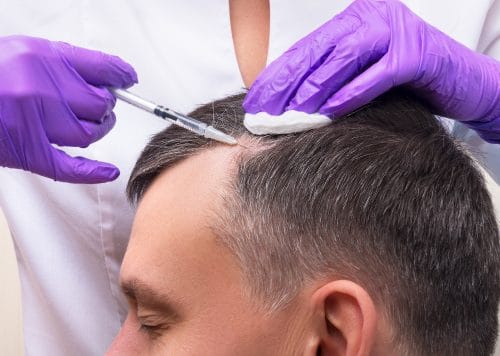
Initially, the procedure involves collecting a small volume of the patient’s blood, which is then subjected to centrifugation to separate the platelets from other blood components and concentrate them. The resulting enriched plasma is prepared for precise application to areas of the scalp requiring treatment.
Over time, hair follicles naturally deteriorate, producing progressively thinner hairs before halting growth completely. PRP injections work to revitalize these compromised follicles, supporting the emergence of thicker, stronger hairs and improving overall hair density and scalp coverage.
Who Can Benefit from PRP Hair Restoration in Lawrenceville?
Platelet-Rich Plasma Hair Restoration is an evidence-based therapy designed to address hair thinning and loss in both men and women. The process involves the targeted injection of platelet-rich plasma into the scalp, where it helps to stimulate follicular activity and support the natural growth of hair. By utilizing the body’s own regenerative properties, PRP treatments aim to strengthen hair follicles and improve overall hair quality over time.
Those considering this therapy in Lawrenceville are typically advised to undergo multiple sessions, generally scheduled every three to four months. The precise number of treatments is determined on a case-by-case basis, depending on the patient’s unique hair restoration goals and the severity of thinning or hair loss.
The procedure itself is performed efficiently, usually lasting between sixty and ninety minutes. With minimal disruption to everyday life, patients can resume their normal activities immediately after treatment, experiencing little to no downtime.
What to Expect During Treatment
Achieving the best results generally requires several treatment sessions, commonly spaced every three to four months. The exact number of sessions is personalized according to the patient’s individual goals and the concerns they wish to address, ensuring the treatment plan is fully customized.
Each procedure is completed within approximately sixty to ninety minutes. Patients experience minimal downtime and are able to resume their regular daily routines immediately after the appointment.
PRP HAIR RESTORATION

Frequently Asked Questions
What exactly is PRP?
PRP, or platelet-rich plasma, is a key component of the body’s natural repair mechanisms, delivering vital growth factors that contribute to tissue regeneration and healing. In combination with white blood cells, PRP also supports nutrient transport and helps speed up the body’s inherent restorative functions.
When utilized in Hair Restoration Therapy, PRP is carefully injected into the scalp to rejuvenate hair follicles that have weakened over time. This treatment encourages collagen production, stimulates the activity of stem cells, and promotes the development of stronger, thicker hair, improving overall texture and density across the treated areas.
The best part?
There is very little chance of an allergic response with PRP since the treatment depends entirely on components from your own body.
Is this treatment for men or for women in Lawrenceville?
While men and women may experience hair loss in different patterns, the psychological impact and decrease in self-confidence can be equally challenging. For individuals in Lawrenceville seeking a natural method to address thinning hair, PRP Hair Restoration offers a proven and effective approach. Clinical studies support its use for people aged eighteen to seventy-two, regardless of whether hair loss is caused by genetics, stress, or other underlying factors.
To achieve the best possible results, PRP therapy is most effective when initiated at the earliest indication of hair thinning. Follicles that remain active, even if weakened, can respond to the treatment, gradually producing thicker, stronger hair and enhancing overall scalp coverage over time.
What should I do to prepare?
Preparing for a PRP session is essential to maximize its effectiveness. Patients are advised to refrain from smoking and to limit alcohol consumption prior to treatment, as both can interfere with the body’s healing process and the therapy’s results. Your scalp should remain free of hair products, including gels, sprays, and mousses, for at least three days before your appointment. Arriving with clean, freshly washed hair ensures the scalp is properly prepared for the injections.
Will I immediately see results?
Hair restoration through PRP is gradual, reflecting the natural cycles of hair growth. While some changes may become noticeable in two to three months, the most pronounced improvements are generally observed around six months after the first treatment.
Many patients notice enhancements in thickness, density, and overall hair health within a few weeks, though exact timing can vary depending on individual response.
Will I need multiple treatments?
Hair loss patterns differ widely, so at least three PRP sessions spaced four to six weeks apart are recommended to achieve consistent hair regrowth. Additional sessions may be required depending on the severity of thinning.
PRP can be used independently or alongside other therapies, such as minoxidil or finasteride for men, to help accelerate results and improve hair restoration outcomes.
Is it painful? Are there any side effects?
Ensuring patient comfort is a central focus during PRP therapy. A topical anesthetic is applied before the treatment to help minimize discomfort. Micro-needle technology is used to reduce pain, and although mild tenderness or irritation may be present afterward, most patients report little to no discomfort during or after the procedure.
What is the downtime?
The procedure involves minimal downtime, allowing patients in Lawrenceville to continue with their daily lives immediately. While some may prefer a brief period of rest after treatment, most find it easy to return to work, errands, or routine activities without disruption.