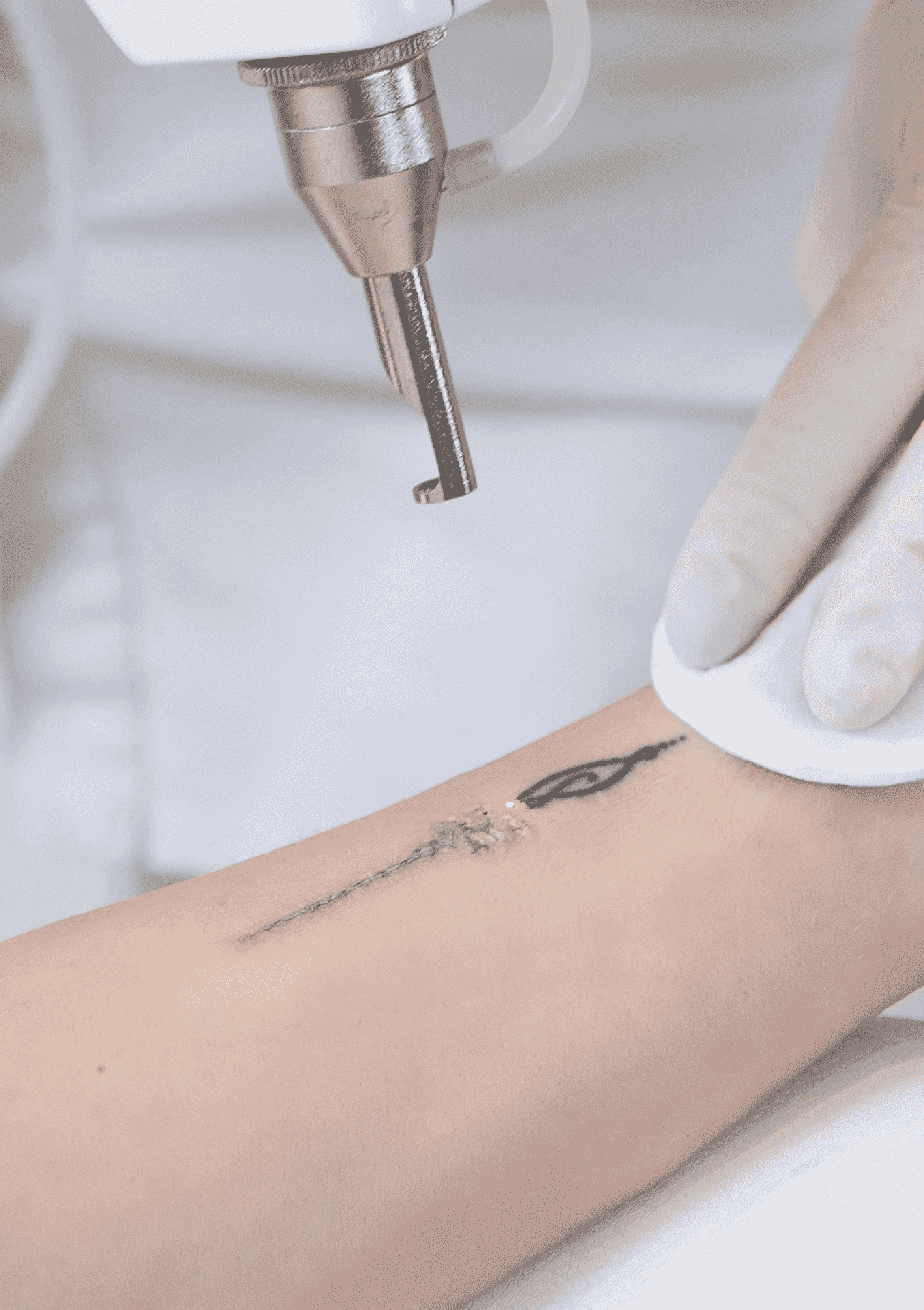
For Norcross residents who are looking to eliminate a tattoo they no longer want, our advanced Q-Switched laser system offers a reliable solution. Utilizing 1064nm and 532nm wavelengths, the treatment works by targeting the ink particles within the skin and fragmenting them into tiny components that the body can safely process and remove. The number of sessions necessary for complete removal depends on a range of factors, including the age of the tattoo, the type of ink, and the density of the original design. Darker pigments, including shades of black and deep blue, respond particularly well to treatment, while more vibrant colors such as red, pink, and other bright tones also demonstrate measurable fading. Over time, with a series of carefully scheduled sessions, tattoos of all colors and compositions gradually lose their visibility, resulting in smoother, clearer skin.
Tattoo removal
Tattoo removal

Purpose
Eliminate tattoos you no longer want using advanced laser systems. Q-Switched technology breaks ink into tiny particles that the body can safely remove. This method works on most colors while providing predictable results.
Treatment Length
Sessions generally range from thirty minutes to one hour. Duration depends on the size of the tattoo and the ink colors used. Simple tattoos may finish faster, while detailed or larger tattoos require longer treatment.
Post-Treatment Healing
Immediately upon completion of the laser procedure, the treated portion of the skin will usually appear lighter in color or white and may feel slightly sensitive, with the area then shifting to redness as the body responds to the treatment. The recovery phase progresses naturally as scabs form over the treated regions, and small blisters may occasionally appear, both of which are standard signs that the skin is healing as expected. It is very important to follow the recommended post-treatment care, including regular moisturizing, avoiding direct sunlight, and protecting the area from potential irritation, in order to achieve the best possible healing and maintain the integrity of the results.
Are there risks?
Laser tattoo removal, when administered by a licensed and certified specialist, is considered a safe and effective way to reduce or completely remove unwanted tattoos. Like most aesthetic treatments, however, it is important to be aware of a few potential risks, which are typically temporary and manageable. Common side effects that may be experienced include localized redness, minor swelling, or mild discomfort, and in certain cases, some clients may notice minor variations in skin pigmentation, especially those with darker skin tones due to the laser’s interaction with the tattoo pigments. Receiving treatment from a qualified professional greatly lowers the chance of adverse effects, creating a smoother, safer, and more reliable tattoo removal experience.
Does Treatment Provide Complete Tattoo Removal in Norcross?
Laser tattoo removal remains one of the most effective approaches for people who want to diminish or completely erase unwanted tattoos. How well the treatment works depends on several key elements, including the size of the tattoo, the variety of pigments used, and the depth at which the ink was originally deposited into the skin. For older, heavily inked, or more complex tattoos, multiple sessions are generally required to achieve the best possible outcome. Each successive session contributes to noticeable fading, making progress evident over time and gradually restoring a cleaner appearance to the treated area.
Advanced laser systems deliver highly targeted energy that acts directly on the ink particles within the skin, fragmenting them for natural removal by the body. Although these treatments are highly effective, results can vary between individuals due to factors such as skin type, ink composition, and the age of the tattoo. Lighter colors like yellow, turquoise, and white typically require extra attention and additional sessions to show significant improvement, while darker pigments tend to respond more quickly. Following the recommended treatment schedule ensures the best long-term results and a smoother, more natural-looking outcome.

Frequently Asked Questions
How does laser tattoo removal in Norcross work?
Laser tattoo removal operates by emitting bursts of highly focused light from a Q-Switched laser directly into the tattoo. The light energy penetrates the skin and targets the pigment particles, breaking them into tiny fragments that the body’s immune system can naturally remove. Over time, repeated treatments allow the tattoo to fade progressively, as the pigment is gradually cleared and the skin returns to a more uniform appearance.
How many sessions will I need for complete tattoo removal?
The number of sessions required depends on several factors unique to the tattoo, including its overall size, the depth of the ink, the combination of colors, and the age of the tattoo. In general, most people undergo between six and twelve sessions to reach the most effective results. Tattoos with simpler designs or lighter pigmentation may require fewer sessions, whereas those with vibrant, deep, or extensive ink often take more sessions to fully remove.
Can laser tattoo removal treat all ink colors?
Most tattoo inks can be addressed effectively with a Q-Switched laser system. Darker pigments, such as black and blue, typically respond more quickly, while reds and pinks gradually fade over multiple sessions. Lighter or more difficult colors, including yellow and green, are slower to respond but can still show significant improvement with persistence and repeated treatments.
Is laser tattoo removal painful?
People in Norcross often describe the sensation of laser tattoo removal as similar to a snapping rubber band on the skin in rapid succession. The level of discomfort differs depending on the location of the tattoo and each individual’s pain tolerance. To make the treatment more comfortable, practitioners can provide topical anesthetics or cooling techniques to minimize sensitivity.
What should I expect during the healing process?
Following treatment, the skin may look whitish and feel delicate in the area that was treated. Redness, scabbing, and minor blister formation may occur as part of the normal healing process, signaling that the skin is recovering. Protecting the area from direct sunlight and regularly applying recommended moisturizers are essential for smooth healing and optimal results.