
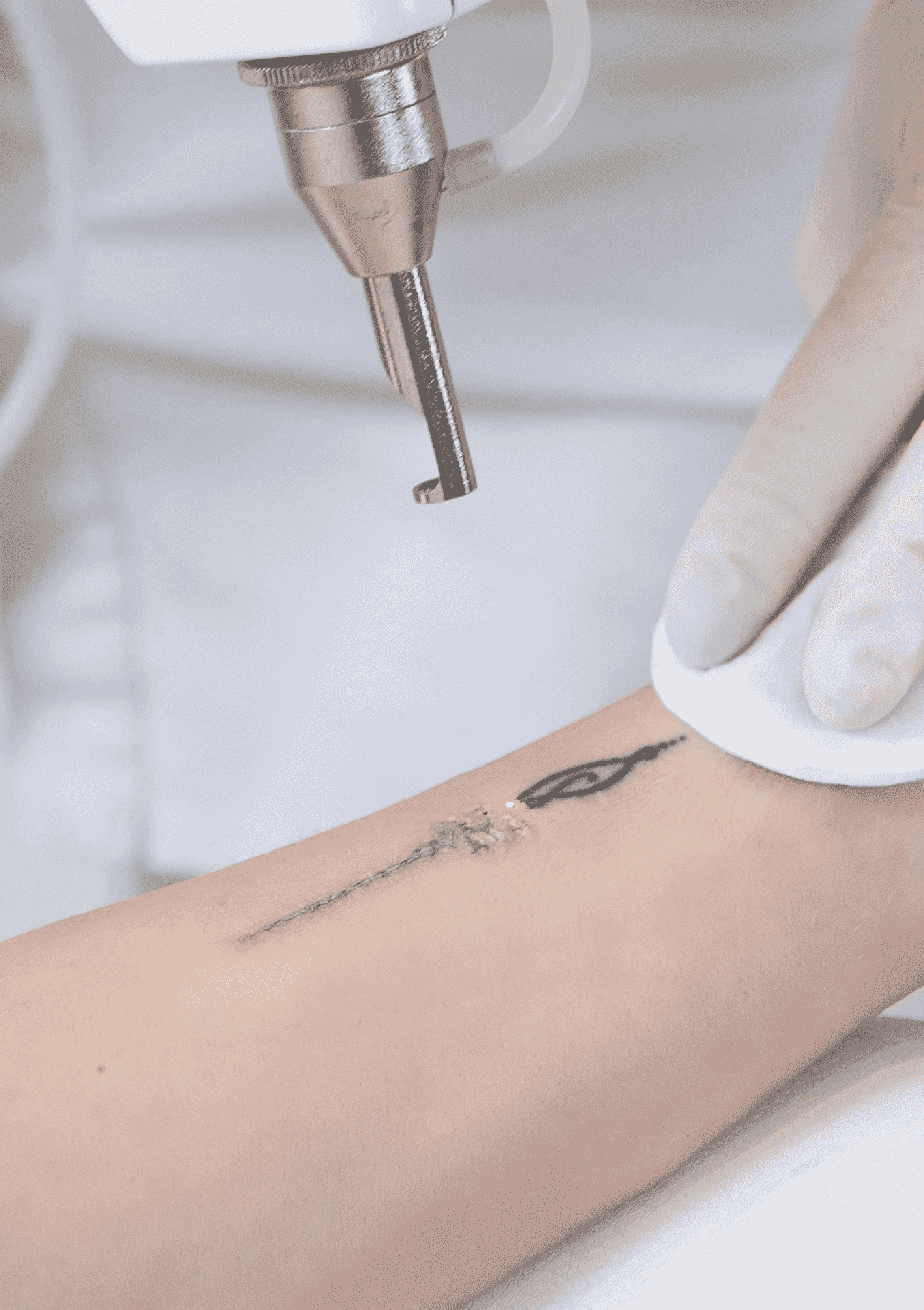
Individuals in Marietta who wish to see their unwanted tattoos disappear can take advantage of our cutting-edge Q-Switched laser treatment, which employs both 1064nm and 532nm wavelengths to focus directly on the tattoo ink. The laser shatters the ink into minuscule particles, which are then naturally eliminated by the body’s immune system. The exact number of sessions required depends on variables such as the age of the tattoo, the depth of the ink, and the pigments used in the original design. This technology is particularly effective on darker inks like black and navy blue, but also achieves noticeable results on vibrant pigments including red, pink, and other bright shades. Over repeated sessions, all colors experience gradual fading, allowing clients to regain a clean, unmarked appearance in the treated area.
Tattoo removal
Tattoo removal

Purpose
Transform unwanted tattoos into a clean, unmarked area with precise laser technology. The Q-Switched system targets ink and shatters it into particles the body removes naturally. It is effective across many colors and produces reliable results.
Treatment Length
Each treatment typically lasts between thirty minutes and an hour. Timing depends on the size of the tattoo and the variety of inks. Larger tattoos or more intricate colors take more time to treat than smaller designs.
Post-Treatment Healing
Directly following treatment, the skin that has been treated with the laser typically shows a white or pale appearance and may feel sensitive or tender, with redness gradually developing as part of the natural inflammatory response. During the subsequent healing period, scabs generally appear over the treated area, and in some cases, small blisters may form, both of which are entirely normal and indicate that the body is actively repairing the skin. Ensuring that the proper aftercare routine is followed, which includes careful moisturizing, keeping the area out of sunlight, and avoiding rubbing or scratching, is crucial to supporting optimal recovery and achieving the intended final results.
Are there risks?
When a licensed and certified professional performs laser tattoo removal, it is widely considered one of the safest approaches to diminishing or completely clearing unwanted tattoo ink. Even though the procedure is generally low-risk, clients should remain aware of a few possible side effects that are usually temporary and mild. The most frequently reported effects include redness, slight swelling, or minor discomfort at the treatment site, and there may occasionally be subtle changes in skin coloration, especially for people with darker complexions as the laser interacts with the pigment beneath the skin. Selecting a well-trained and experienced practitioner dramatically reduces the risk of complications, ensuring a safe, smooth, and effective removal process.
Does Treatment Provide Complete Tattoo Removal in Marietta?
For those seeking to reduce or entirely remove tattoos, laser tattoo removal has become a leading and reliable solution. The success of the treatment depends on multiple variables, including the overall size of the tattoo, the range of colors involved, and the depth of ink placement within the skin. Older, heavily inked, or highly detailed tattoos generally necessitate several sessions in order to achieve the most effective results, with each session contributing to gradual and perceptible fading over time. This progressive improvement allows clients to see their tattoos diminish and the skin regain a more uniform and natural appearance.
Modern laser technology delivers energy with precision directly to the pigment, breaking it down into microscopic particles that the body can remove naturally. While the majority of tattoos respond well, the final result can vary from person to person due to differences in ink, skin characteristics, and the complexity of the design. Lighter colors such as yellow, turquoise, or white are more challenging to fade and frequently require additional treatments and repeated sessions before significant improvement is observed. Following each treatment carefully ensures the process is safe and effective.

Frequently Asked Questions
How does laser tattoo removal in Marietta work?
Laser tattoo removal works by transmitting precise pulses of light energy from a Q-Switched laser into the tattooed region. This energy penetrates the epidermis and dermis, targeting the ink particles and fragmenting them into very small pieces. The body’s immune system then gradually clears these fragments over time, which is why the tattoo fades gradually across several treatment sessions until the ink becomes significantly less visible.
How many sessions will I need for complete tattoo removal?
The total number of treatments required depends on several aspects of the tattoo, including its size, how deeply the ink was applied, the range of colors, and the age of the design. Typically, most patients need six to twelve sessions to achieve substantial fading and effective removal. Some tattoos may respond faster and need fewer treatments, while others with dense or highly vibrant inks may require additional sessions for full results.
Can laser tattoo removal treat all ink colors?
Most tattoo pigments can be treated using a Q-Switched laser system. Black and blue inks usually fade relatively quickly, while reds and pinks also respond well over multiple treatments. Colors such as yellow and green can be more resistant, but with consistent application of sessions, these pigments can still be significantly reduced over time.
Is laser tattoo removal painful?
Clients in Marietta often compare the sensation to multiple, quick snaps from a rubber band against the skin. The discomfort varies according to the tattoo’s location and the individual’s pain sensitivity. To ease the experience, numbing creams or cooling devices are typically offered during the procedure.
What should I expect during the healing process?
Immediately after treatment, the treated area may appear whitish and feel somewhat sensitive or tender. Redness, scabbing, and minor blistering are common and indicate that the healing process is occurring. Following proper aftercare, including moisturizing and protecting the area from sunlight, is critical for smooth recovery and effective fading results.