
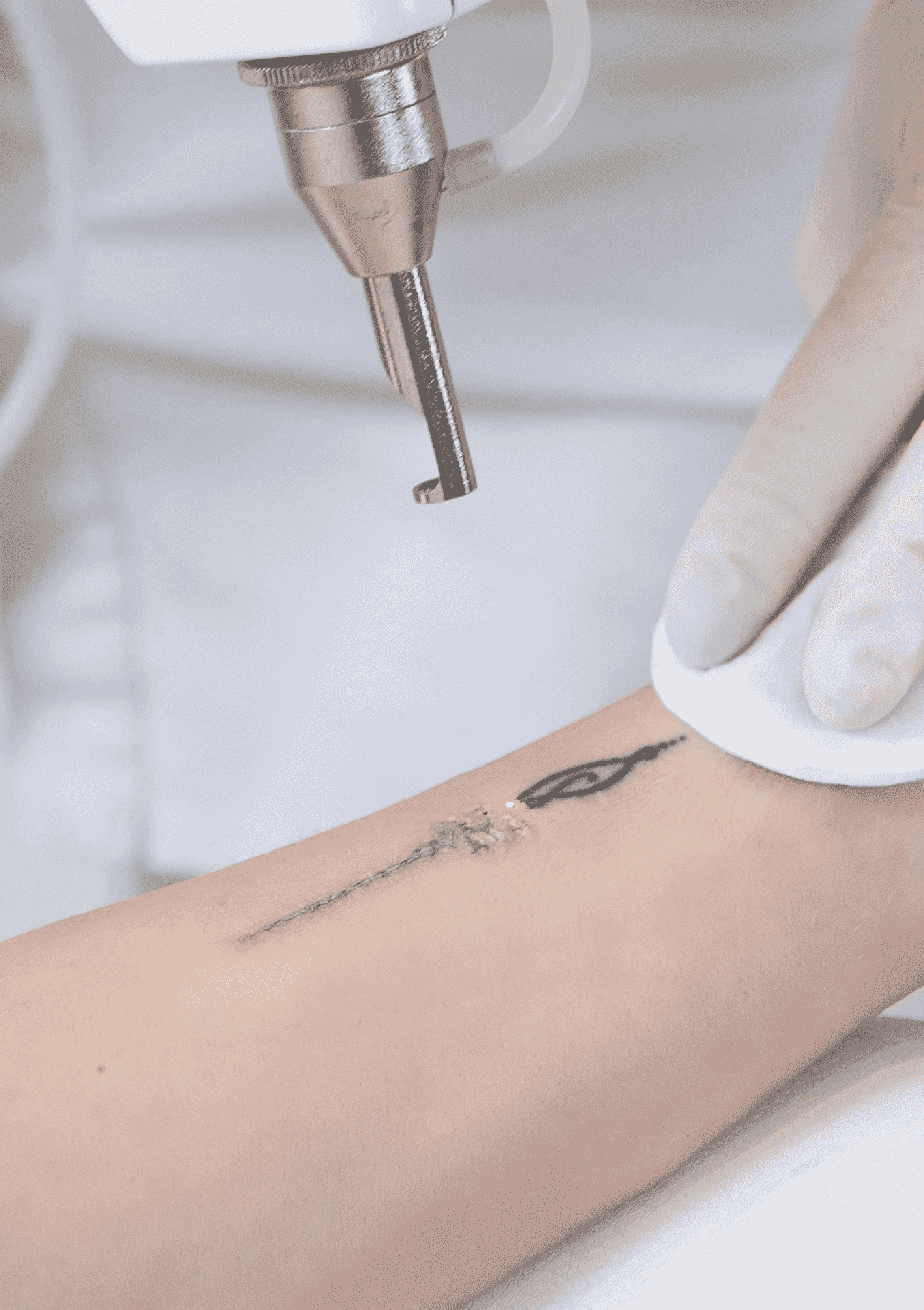
If you live in Dunwoody and feel regret about an old tattoo, you can find relief with our advanced Q-Switched (1064nm/532nm) laser procedure that works by breaking down ink into particles small enough for the body to remove naturally. The technology is designed to treat a wide range of ink colors while keeping risks low, though it is important to understand that several sessions may be required depending on the ink and how long the tattoo has been in place. Black, blue, red, and pink pigments respond especially well to this treatment, while ongoing sessions lead to noticeable fading of every shade.
Tattoo removal
Tattoo removal

Purpose
Erase or fade tattoos you no longer wish to keep through the safe and effective use of state-of-the-art laser procedures.
Treatment Length
Sessions usually last anywhere from 30 minutes to one hour, depending on factors such as the tattoo’s overall size and the number of pigments that were originally applied.
Post-Treatment Healing
After the treatment, the affected skin area often becomes white and tender to the touch before changing to a reddish appearance. Soon after, scabbing forms and, in some cases, slight blistering may also occur. These changes are considered normal during the body’s healing process. Ensuring that the area is kept moisturized and carefully shielded from direct sunlight helps promote successful recovery.
Are there risks?
Laser tattoo removal, when handled by qualified experts, is generally considered a safe and reliable method for fading tattoos. Like most cosmetic services, it does present certain potential side effects that should be openly discussed with patients before treatment begins. These side effects can include temporary redness, swelling, or mild tenderness in the area where the laser was applied. In some situations, especially among patients with darker complexions, slight pigment irregularities can develop due to the way the laser targets ink particles. Nonetheless, choosing an experienced team of trained professionals ensures that these risks are minimised and that the treatment is carried out with maximum safety in mind.
Does Treatment Provide Complete Tattoo Removal?
Laser treatments provide one of the most trusted methods for significantly reducing the presence of unwanted tattoos. Complete removal can vary depending on elements such as the size of the tattoo, the range of colours it contains, and the depth at which the ink is embedded. For best results, several sessions are often recommended, since certain inks can be especially resilient. Even so, visible fading is usually noticeable with each successive treatment.
Modern laser technology continues to be one of the most reliable approaches for tackling tattoo pigment, though results are always individual. Some shades, particularly lighter hues, tend to take longer to respond and may require a greater number of sessions to achieve the desired outcome.

Frequently Asked Questions
How does laser tattoo removal work?
The process of laser tattoo removal relies on the use of a Q-Switched laser, which emits intense pulses of light energy into the tattooed skin. The light specifically targets the ink pigments, breaking them down into tiny fragments that can then be removed by the body’s natural filtering system. Because the body clears the ink gradually, results appear progressively across multiple sessions.
How many sessions will I need for complete tattoo removal?
The number of sessions varies from person to person, depending on several contributing factors. Tattoo size, the depth of ink application, the colors used, and how old the tattoo is all influence the timeline. Most tattoos require between six and twelve treatments for noticeable fading, although more complex designs may need additional sessions.
Can laser tattoo removal treat all ink colors?
Yes, laser tattoo removal can address a variety of ink shades. Black, blue, and red often respond quickly to treatment, while pink shades also break down with consistency. Certain colors, such as green or yellow, can be more stubborn, but repeated sessions usually help them fade over time as well.
Is laser tattoo removal painful?
Patients in Dunwoody often compare the sensation to a rubber band repeatedly snapping against the skin. While this can cause some discomfort, the procedure is generally brief and tolerable. To minimize pain, numbing options and cooling devices can be applied before and during treatment.
What should I expect during the healing process?
After a session, the treated area may appear white and feel tender for several hours. Common side effects include redness, swelling, scabbing, or even small blisters. Proper aftercare, including keeping the area moisturized and avoiding prolonged sun exposure, helps the skin heal effectively and reduces the chance of complications.