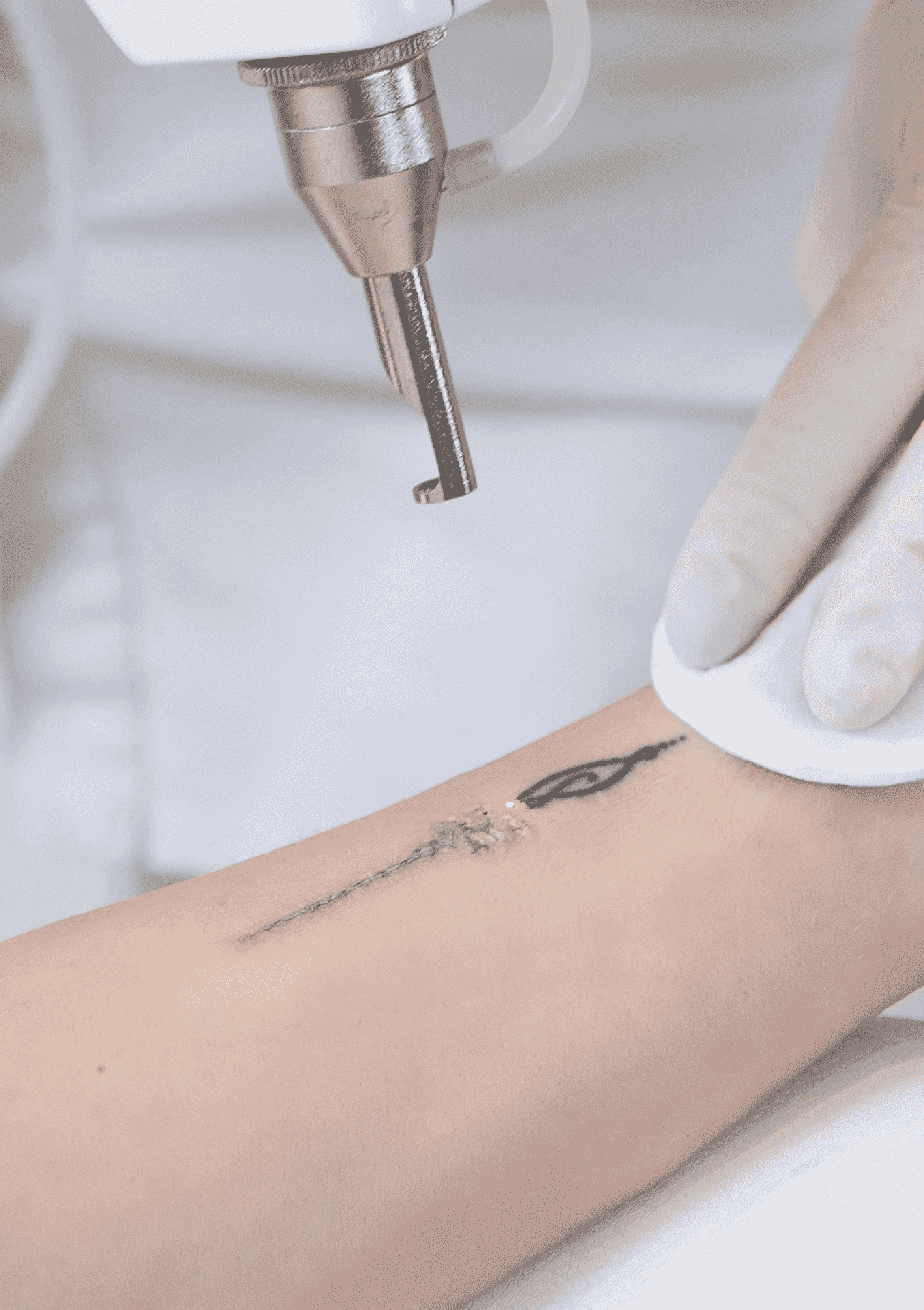
Residents of Lawrenceville seeking to remove tattoos they no longer desire can rely on our advanced Q-Switched laser treatments, which operate at 1064nm and 532nm wavelengths to target the tattoo ink with precision. By breaking the pigment into microscopic fragments, the treatment enables the body’s natural processes to gradually eliminate the particles, leaving the skin free of visible ink over time. While the exact number of sessions varies depending on factors like tattoo age, ink composition, and complexity of the design, the laser delivers particularly strong results on darker colors, including black and deep blue, as well as on bright pigments such as red and pink. With regular, carefully spaced treatments, even lighter or multi-colored tattoos gradually lose their intensity, allowing clients to achieve a cleaner, more natural appearance.
Tattoo removal
Tattoo removal

Purpose
Remove unwanted tattoos with targeted high-powered laser treatment. Q-Switched lasers break the pigment into small particles for the body to clear away naturally. This approach works on multiple ink colors and provides safe, consistent results.
Treatment Length
Sessions usually take thirty minutes to an hour. The size of the tattoo and the inks used determine how long the treatment lasts. Smaller tattoos require less time, while larger or multicolor tattoos take longer.
Post-Treatment Healing
Immediately after the procedure, the treated skin usually appears white and may feel sensitive, with the area quickly turning red as the skin responds to the laser treatment. As healing continues, scabs often develop, and small blisters can sometimes occur, which are normal reactions that signal the skin is repairing itself. Following all aftercare instructions diligently, including applying recommended moisturizers, shielding the area from sun exposure, and avoiding any activities that might irritate the skin, is essential to ensure the healing process is successful and that the results remain clear and lasting.
Are there risks?
Performed by a certified and licensed practitioner, laser tattoo removal is recognized as a highly safe method for fading or eliminating unwanted tattoos. It is still important to consider a few potential risks that are normally temporary and mild, as is the case with most cosmetic procedures. Commonly observed side effects include redness, slight swelling, or minor discomfort in the treated area, while in some cases, subtle differences in skin tone can occur, particularly for clients with darker complexions due to the way laser light targets pigments below the skin’s surface. Having treatment conducted by an experienced professional greatly reduces the possibility of complications, allowing for a safer and more controlled outcome.
Does Treatment Provide Complete Tattoo Removal in Lawrenceville?
Laser tattoo removal is widely recognized as an effective method for individuals who want to fade or fully eliminate unwanted tattoos. The degree of success for each client depends on several factors, including the size of the tattoo, the colors used, and the depth at which the ink has been deposited under the skin. Tattoos that are older, heavily saturated, or particularly complex generally require multiple sessions to achieve optimal results, with each session contributing to visible and gradual fading over time. This step-by-step improvement allows clients to track progress while restoring a clearer and more uniform look to the treated area.
Using advanced Q-Switched laser systems, targeted energy is delivered precisely to the tattoo pigments to break them down into particles small enough for the body to naturally remove. Results differ from one person to another, depending on skin type, pigment colors, and tattoo complexity. Lighter pigments such as yellow, turquoise, and white tend to respond more slowly and often require additional sessions before significant fading is seen. Adhering to the full treatment plan ensures the best results and supports a safe and effective fading process.

Frequently Asked Questions
How does laser tattoo removal in Lawrenceville work?
Laser tattoo removal operates by sending precise bursts of light from a Q-Switched laser into the tattooed skin. The laser energy penetrates the skin and acts directly on the pigment, breaking it into minute particles that the body can naturally clear. Over a series of treatment sessions, the body gradually removes the fragments, which leads to a progressive fading of the tattoo over time.
How many sessions will I need for complete tattoo removal?
The required number of sessions varies depending on factors unique to the tattoo, such as its size, the depth of ink application, the colors involved, and the age of the tattoo. Typically, most clients undergo six to twelve treatments to achieve optimal fading. Some tattoos with simpler designs or darker inks may require fewer sessions, whereas highly detailed, multicolor, or older tattoos often need more sessions to achieve complete removal.
Can laser tattoo removal treat all ink colors?
The majority of tattoo colors can be treated effectively with a Q-Switched laser. Darker shades like black and blue respond more quickly, while red and pink pigments also gradually fade with multiple treatments. Lighter or more challenging colors, including yellow and green, often require additional sessions but can still be reduced over time with repeated treatments.
Is laser tattoo removal painful?
Many patients in Lawrenceville describe the sensation of laser tattoo removal as similar to repeated snapping of a rubber band against the skin. Discomfort varies depending on the area of the tattoo and each individual’s tolerance. To make the experience more comfortable, numbing creams and cooling methods are commonly applied during the procedure.
What should I expect during the healing process?
After treatment, the skin may initially turn whitish and feel more sensitive than usual. Redness, scabbing, and small blisters are common parts of the normal healing process. Using recommended moisturizers and keeping the treated area protected from sunlight are essential steps to ensure smooth recovery and optimal results.